
In 2026, many QIMS authors make outstanding contributions to our journal. Their articles published with us have received very well feedback in the field and stimulate a lot of discussions and new insights among the peers.
Hereby, we would like to highlight some of our outstanding authors who have been making immense efforts in their research fields, with a brief interview of their unique perspective and insightful view as authors.
Outstanding Authors (2026)
Bum Joon Kim, University of Ulsan College of Medicine, South Korea
Mohammed Misbahuddin-Leis, University Hospital Augsburg, Germany
Edwin H. G. Oei, Erasmus MC Rotterdam, The Netherlands
Garrett Regan, Mayo Clinic Rochester, USA
David J. Lubin, SUNY Upstate University Hospital, USA
Patrycja Matusik, University Hospital in Kraków, Poland
Jongjin Yoon, Yonsei University College of Medicine, South Korea
Andi Leemans, Vrije Universiteit Brussel, Belgium
Outstanding Author
Bum Joon Kim

Dr. Bum Joon Kim, MD, PhD, is a vascular neurologist at the Department of Neurology and Stroke Center, Asan Medical Center, University of Ulsan College of Medicine, Seoul, South Korea. His research focuses on acute ischemic stroke, stroke mechanisms, cerebral small vessel disease, intracranial atherosclerosis, cardioembolic stroke, hemodynamics and post-stroke outcomes. He has led and participated in multiple clinical and imaging-based studies addressing stroke recurrence, early neurological deterioration, blood pressure management after endovascular thrombectomy, atrial fibrillation detection after embolic stroke of undetermined source, and antithrombotic strategies in high-risk stroke populations. His recent work includes randomized and multicenter studies on acute antiplatelet therapy, atrial fibrillation monitoring, and long-term outcomes in rare and sporadic small vessel disease. He is also actively involved in academic societies, clinical education, and editorial activities in the field of cerebrovascular disease.
In Dr. Kim’s opinion, curiosity is the most fundamental skill set of an author. As a clinician, many research questions arise naturally from caring for patients in daily practice. In stroke medicine, treatment strategies differ according to the underlying mechanism, so he often asks why a stroke occurred and how he can better identify its cause. Imaging plays a particularly important role in revealing stroke mechanisms, and quantitative imaging analysis can provide more objective and reproducible insights. This clinical curiosity, combined with rigorous methodology, objective interpretation, and clear communication, is essential for producing meaningful scientific work.
To avoid bias in writing, Dr. Kim stresses that it is important to separate clinical hypotheses from evidence-based conclusions. In data interpretation, using automated analysis programs, independent ratings by multiple reviewers, and structured processes to resolve discrepancies can help improve objectivity. Quantitative analysis is also important because it provides more reproducible and less subjective evidence. Authors should avoid overstating their findings, acknowledge limitations, and present both positive and negative results transparently.
“I believe that knowledge that is not shared cannot truly come alive. Since childhood, I have been accustomed to discussing scientific ideas with my father, who is a scientist, and this has shaped my interest in sharing new knowledge and engaging in constructive discussion. Academic writing is one way to communicate clinical questions, research findings, and new perspectives with the broader community. I am motivated by the belief that sharing and debating knowledge can help us learn from one another and ultimately move the field forward,” says Dr. Kim.
(by Brad Li, Masaki Lo)
Mohammed Misbahuddin-Leis
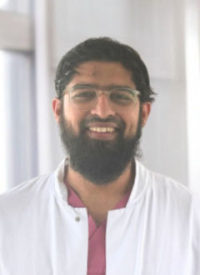
Dr. Mohammed Misbahuddin-Leis, MD, is a radiologist with a special interest in interventional radiology and neuroradiology. After completing his training in radiology and advanced training in interventional radiology in Germany, he is currently pursuing further subspecialty training in neuroradiology at the University Hospital Augsburg. His clinical and research interests include embolization, neurovascular interventions, hepatobiliary interventions, vascular interventions, and simulation-based medical education. Dr. Misbahuddin-Leis is actively involved in academic research and scientific publishing, with multiple peer-reviewed publications and presentations at international conferences. His recent work includes the development of MANTA, a low-cost 3D-printed vascular phantom for simulation-based embolization training, which was presented at the European Conference on Embolotherapy (ET2026) in Valencia, Spain. His long-term goal is to advance image-guided minimally invasive therapies through clinical excellence, innovation, research, and education. Connect with him on LinkedIn.
The way Dr. Misbahuddin-Leis sees it, academic writing is how we share knowledge and learn from each other. Every study, case report, or review adds a small piece to the bigger picture. In medicine, academic writing helps turn clinical experience into information that others can use to improve patient care. In his opinion, it is important to look at one‘s own work honestly and not only focus on the positive results. Good scientific writing should discuss both strengths and limitations. Reading the literature carefully, comparing different viewpoints, and asking colleagues for feedback can also help make writing more critical and balanced.
In addition, Dr. Misbahuddin-Leis points out that institutional review board (IRB) approval helps ensure that research is conducted responsibly and that the rights and privacy of participants are protected. Patient safety and ethics should always come first. Without IRB approval, a study may not meet ethical standards, may not be accepted for publication, and could undermine trust in the research itself.
(by Brad Li, Masaki Lo)
Edwin H. G. Oei
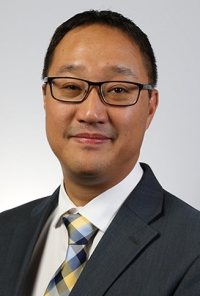
Edwin Oei, MD, PhD, is a Full Professor and Section Chief of Musculoskeletal Imaging in the Department of Radiology & Nuclear Medicine at Erasmus MC Rotterdam, The Netherlands. He is the principal investigator of the Advanced Musculoskeletal Imaging Research Erasmus MC (ADMIRE) lab, comprising 15 PhD students and other affiliated researchers. His research focuses on optimization, validation and application of advanced, quantitative, imaging techniques to visualize multi-tissue changes in common musculoskeletal disorders such as osteoarthritis, osteoporosis, sports injuries, and chronic musculoskeletal pain. His team uses various imaging modalities, including MRI, (photon counting) CT, ultrasound, and hybrid PET-MRI. Prof. Oei is also involved in other research topics such as population imaging and artificial intelligence. He is an active member of various scientific societies and committees. He is the vice-president of the International Society of Osteoarthritis Imaging (ISOAI) and a recent past-president of the European Society for Magnetic Resonance in Medicine and Biology (ESMRMB). Connect with him on LinkedIn.
QIMS: What are the most commonly encountered difficulties in academic writing?
Prof. Oei: I believe the most common difficulties in academic writing is to step out of your bubble and translate your research findings into a message that speaks to the general readership of a journal, using language that is clear and easy to understand. Too often, we as scientists are so deeply engaged in our own research that we forget about the bigger picture, the relevance but also the shortcomings of our work, and how it relates to real-life problems. We also oftentimes use jargon that is common in our own research environment, but may be difficult to understand for readers from outside that niche.
QIMS: The burden of being a scientist/doctor is heavy. How do you allocate time to write papers?
Prof. Oei: Being a clinical scientist, it is not easy to find enough time to write papers. There is always the pressure of clinical workload and clinical managerial tasks. Fortunately, my department is quite generous in allocating dedicated research time for radiologists with a substantial research activity. Also, as the career progresses, it is more common to co-supervise PhD students with other scientists, meaning that I usually get to read and revise manuscripts at a more advanced stage than an initial draft version. Nevertheless, the most efficient time to work on a paper is usually outside of clinical working hours when it is easier to focus on writing for an extended period of time.
QIMS: What is fascinating about academic writing?
Prof. Oei: What I find fascinating about academic writing, is that the typical structure of scientific papers as well as authors guidelines such as word limits, forces scientists to think very critically about their own work and its relevance. You have to identify the key messages and convey these in a clear manner to the readers, leaving out non-essential analyses and results (which, in fact, may have required a lot of work!). In all, this generally strengthens the interpretation of research findings and the link to clinical relevance. Oftentimes less is more!
(by Brad Li, Masaki Lo)
Garrett Regan
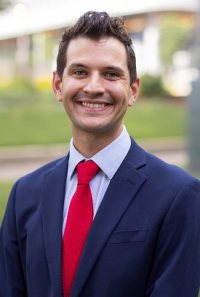
Garrett Regan is a fifth-year Biomedical Engineering PhD student at Mayo Clinic Rochester. He works under his advisor, Dr. David Holmes III, PhD, in the Biomedical Analytics and Computational Engineering (BACE) laboratory. His research focuses technically on developing uncertainty quantification methods for clinical artificial intelligence models, and clinically on the development of AI-based tools to aid in the diagnosis and treatment of Crohn’s Disease. Specifically, his primary thesis project centers on the development of an AI copilot tool to support the radiologic measurement of intestinal strictures—a common complication of Crohn’s Disease—in ongoing clinical trials. Follow him on LinkedIn.
Garrett believes that all good academic papers are founded on rigorously collected and analyzed data. With enough intellectual curiosity, any unique research idea can be transformed into a quality academic paper. In his opinion, it is crucial to bear in mind the narrative one is trying to tell with the data. Articulating a cohesive story around one’s results is important for applying a greater meaning to findings. Additionally, understanding the audience of the journal will help direct this narrative when time comes to prepare the paper.
“My work sits uniquely at the intersection of technical development and clinical practice. I felt that QIMS provided an optimal balance between these audiences that would each understand the importance and contributions of my work,” says Garrett.
(by Brad Li, Masaki Lo)
David J. Lubin
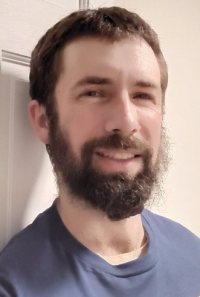
Dr. David J. Lubin, MD, PhD, is an Associate Professor, the Director of Researchand the Division Director, at the Department of Radiology and Nuclear Medicine, SUNY Upstate Medical University, Syracuse, NY. He currently works in Voxel-based dosimetry for both pre-treatment and post-therapy management. He has also been getting into the foray of constructing and testing protein-based novel theranostics agents.
According to Dr. Lubin, a good academic paper should present material in a way that clearly illustrates the subject matter in the readers’ minds while also providing convincing arguments to support the acceptance of the author's hypotheses. The paper should encourage thoughtful discussion and inspire readers to ask further questions and propose experiments to explore the topic more deeply. Academic writing should foster growth in research and motivate additional work in the scientific area addressed in the paper.
Dr. Lubin claims that one of the most challenging aspects of academic writing is avoiding overly narrow arguments and presenting material effectively. It can be a fine line for staying unbiased, on the one hand, authors try to present their hypothesis and the arguments in the most convincing way possible, and yet they have to acknowledge realistically what the data say, what the limitations are in the experiments, and what the counter arguments are, and to give them a fair presentation. He believes that maintaining a careful balance is essential to avoid bias in academic writing. It is important to clearly present counterarguments and comprehensively address the points they raise.
“Follow your passions and curiosity and don’t give up! This guiding principle is especially crucial now, as researchers face heightened pressure to produce results despite having less time, fewer resources, and the growing complexity of research compared to previous years. Additionally, challenging is the scarcity of reviewers and the increased turnaround time of communication between authors and the journal. Despite all this, even if you have to stretch yourself a little here and there, in the end it will be worth it, and you will have added to the body of knowledge, and you will have something you can look back on and be proud of,” says Dr. Lubin.
(by Sasa Zhu, Masaki Lo)
Patrycja Matusik
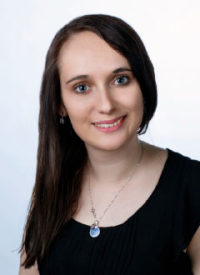
Patrycja S. Matusik, MD, PhD, is a radiology resident at the Department of Diagnostic Imaging, University Hospital in Kraków, Poland, and is academically affiliated with the Chair of Radiology at Jagiellonian University Medical College. She completed both her medical degree and PhD at Jagiellonian University in Kraków. Her interdisciplinary research interests include diagnostic imaging, with a particular emphasis on cardiovascular and cardiac imaging, as well as heart rate variability, advanced ECG/Holter monitoring analysis, and the use of artificial intelligence in medicine. Cardiac imaging represents an important area of her clinical and scientific work, linking radiology with cardiology and modern diagnostic technologies. She completed two research internships at Washington University School of Medicine in St. Louis, USA, in the Heart Rate Variability Laboratory under the mentorship of Prof. Phyllis K. Stein. Her work aims to improve the understanding and diagnosis of cardiovascular and other diseases. She has co-authored a broad range of peer-reviewed publications in international medical journals.
In Dr. Matusik’s view, academic writing is important because it allows authors to share what they have learned with others. In medicine, this matters a lot because research can help improve the way doctors diagnose diseases, choose treatment, and care for patients. For her, writing is also a way to better understand her own work. When she writes, she has to ask herself what the results really mean, what their limitations are, and how they may be useful for other doctors or researchers. In fields such as radiology, cardiac imaging, and artificial intelligence, good academic writing helps new ideas move from individual research projects into wider clinical practice.
Dr. Matusik thinks that a good author should be curious, careful, and honest. Curiosity helps us ask interesting questions, but careful analysis and responsible interpretation are just as important. An author should also be able to explain complex topics in a clear and simple way. Academic writing also requires patience. A manuscript is rarely perfect at the beginning. It usually takes many revisions, discussions with co-authors, and responses to reviewers before the final version is ready. Being open to feedback is one of the most valuable skills an author can have.
“One important experience for me was my work on heart rate variability and advanced Holter monitoring analysis during my internships at Washington University School of Medicine in St. Louis. It was a very inspiring time, because I could see how clinical medicine, physiology, and technology can come together in one research question. This experience also changed the way I look at writing. I realized that a good paper is not only a collection of results. It should tell a clear and honest story about what we found, why it matters, and what questions are still open. Very often, while writing, new ideas for future research appear. That is one of the reasons why I find academic writing both challenging and rewarding,” says Dr. Matusik.
(by Sasa Zhu, Brad Li)
Jongjin Yoon
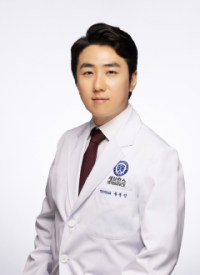
Jongjin Yoon, MD, PhD, is a Clinical Assistant Professor of Radiology at Severance Hospital, Yonsei University College of Medicine in Seoul, South Korea, where he specializes in genitourinary imaging. Trained initially as an engineer with a cum laude B.S. from Yonsei’s College of Engineering, followed by an M.D. and Ph.D. in pharmacology, he approaches problems by converting physiological questions into quantifiable metrics. His research focuses on quantitative renal MRI, particularly R2* mapping of renal oxygenation in hepatorenal syndrome and diabetic kidney disease, as well as AI and radiomics applications for prostate, bladder, and renal cancers. Recent projects include predicting BRCA mutations from prostate MRI, MEST score prediction in IgA nephropathy, and noninvasive diagnosis of renal allograft rejection. He also serves as co-founder and CTO of UroInsight, a Yonsei-affiliated startup, and as an editorial committee member of the Journal of the Korean Society of Radiology.
In Dr. Yoon’s view, a good paper starts with an unanswered clinical question, answers it reproducibly, and clearly states its limitations. His recent study on renal R2* in hepatorenal syndrome illustrates this well. First, the question should address a genuine gap. While many studies build on well-explored topics, the most useful ones tackle previously unasked questions. When starting this work, abundant literature existed on biomarkers for HRS-AKI, but none on imaging for HRS-AKD—the subacute stage where intervention could still alter outcomes. This gap drove the study. Second, reproducibility is essential. He used a commercially available chemical shift-encoded sequence, open-source 3D Slicer for segmentation, and PyRadiomics for feature extraction, reporting all parameters. Two radiologists segmented independently, yielding an intraclass correlation coefficient of 0.86. Third, and most challenging, is clearly defining limits. Renal R2* showed the highest AUROC (74.5) but was not statistically superior to liver stiffness or serum markers. With only eight HRS-AKD events, he applied Firth’s penalized regression, described the multivariable analysis as exploratory, and used cautious language such as “promising candidate” rather than “predictor.” A strong paper does not need to fully resolve a question but should guide the next steps, such as prospective multicenter validation, cortex-medulla quantification, and comparison with urinary biomarkers.
Dr. Yoon indicates that two challenges stood out in this study. The first was reporting results from a small number of events (only eight HRS-AKD cases despite having screened 561 patients). He addressed this transparently with Firth’s regression, sensitivity analyses, and explicit notes on imprecision and the exploratory nature of the model. The second was distinguishing association from causation. Anticipating reviewer concerns, he showed that renal R2* remained associated with HRS-AKD even in patients with preserved baseline renal function, suggesting that it may reflect vulnerability rather than established dysfunction—yet he used “may” rather than definitive language.
Three aspects of academic writing interest Dr. Yoon. First, linking measurements to physiology: a renal R2* cut-off of 20.8 s⁻¹ indicates likely hypoxia, repurposing iron-assessment data to answer a new question after ruling out iron as the cause. Second, writing clarifies reasoning—turning vague impressions into explicit arguments (e.g., why R2* targets the kidney directly, unlike liver stiffness, or why it fits the subacute AKD window better than acute tubular markers). Third, a paper can influence patient care: R2* mapping adds minimal scan time and could enable earlier surveillance, optimization, and transplant referral for at-risk patients with ascites. Ultimately, a paper serves as a starting point for others, requiring prospective validation.
(by Brad Li, Masaki Lo)
Andi Leemans
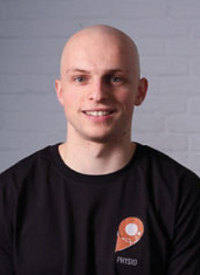
Andi Leemans obtained his Master’s degree in Rehabilitation Sciences and Physiotherapy from Vrije Universiteit Brussel (VUB), Belgium, in 2025, with a specialization in manual therapy. During his studies, he developed a strong interest in scientific research within rehabilitation sciences, particularly in medical imaging, skeletal muscle assessment, and the reliability of measurement techniques. Together with Louise Machtelinckx, he conducted a systematic review on the intra- and inter-rater reliability of MRI-based skeletal muscle mass assessment in adults, which was published in Quantitative Imaging in Medicine and Surgery. This research was performed within the Experimental Anatomy Research Group at VUB and highlighted current challenges in the field, including the limited evidence regarding whole-body skeletal muscle mass assessment and automated segmentation approaches. Building on these findings, they further explored different MRI segmentation techniques for whole-body skeletal muscle assessment, with a particular interest in improving efficiency and clinical applicability. He currently works as a physiotherapist and manual therapist while maintaining a strong interest in research, medical imaging, and emerging technologies in healthcare. Connect with him on LinkedIn.
According to Andi, a good author must above all be curious. Scientific research begins with asking meaningful questions and maintaining the motivation to deeply understand a topic. He learned during his research project that curiosity, combined with persistence and continuous learning, is essential when writing scientific papers. In addition, critical thinking and openness to feedback are fundamental. Authors should rigorously evaluate their own work while remaining receptive to input from colleagues, supervisors, and reviewers. Finally, scientific integrity and accuracy are crucial—authors must present their methods and findings transparently so that others can interpret and build upon the research.
During his research project, Andi balanced scientific manuscript writing with his physiotherapy studies. He has learned that effective scientific writing requires dedicated blocks of focused time. Short sessions are often insufficient for meaningful progress, whereas longer periods allow him to immerse himself in the literature, analyze results, and reflect critically on the research. For him, writing a paper is not only about producing text but also about gaining deep understanding of the topic, discussing ideas with collaborators, and continuously refining the manuscript. Although he currently works primarily in clinical practice as a physiotherapist and manual therapist, he believes that maintaining a connection with research is highly valuable. Combining clinical experience with scientific evidence is essential for improving patient care and driving future innovations.
In addition,Andi believes that following reporting guidelines is highly important during manuscript preparation. In their systematic review, he and his team followed the PRISMA guidelines, which provided a structured framework for transparent reporting of the search strategy, study selection, and evidence synthesis. He notes that reporting guidelines improve consistency and quality across publications. They help authors clearly describe their methodology and enable readers and reviewers to better assess validity and reproducibility. He does not view these guidelines as limitations, but rather as valuable tools that support transparent and standardized communication of findings. This is particularly important in medical imaging, where methodological differences can affect results, making clear reporting essential for meaningful comparisons and scientific progress.
(by Brad Li, Masaki Lo)